
In this post, we present some background research and links that were prepared for a podcast episode that, for various reasons, regretfully never quite made it as far as a recording session.
Our inspiration arose from a very special interview conducted by our friend, leading UK author, television historian and podcaster, Oliver Crocker, as part of his The Bill Podcast series, with John Challis, whom everyone remembers so fondly as Boycie, from the long-running BBC comedy, Only Fools and Horses.
John Challis was just one of many of the Only Fools ensemble to appear in The Bill. He sadly passed away in September 2021.
Here is the interview in full, from The Bill Podcast on Soundcloud. Episodes are also available on Spotify, Apple and all the major platforms.

Hear Oliver in previous DEC4 episodes – a two-part in conversation from 2021, and a tribute to actor and playwright, Frank Williams, published June 2023.
Companion Newsletter
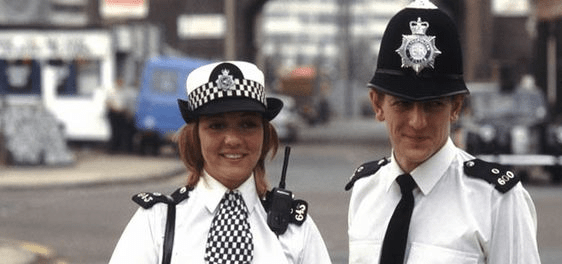
Aside from the crossover in terms of the actors, The Bill (Thames/ITV) and Only Fools and Horses (BBC) shared many common elements. Both series emerged in the early 1980s, a period of great political and social upheaval in Margaret Thatcher’s Britain. It was a time of the television anti-hero; Del-Boy in Only Fools and Horses, Oz in Auf Wiedersehen Pet, Arthur Daly in Minder, Yosser in Boys from the Blackstuff, and the rebellious, eccentric barrister for the defence, Horace Rumpole.
And Ted Roach, Roy Galloway and Frank Burnside in The Bill.
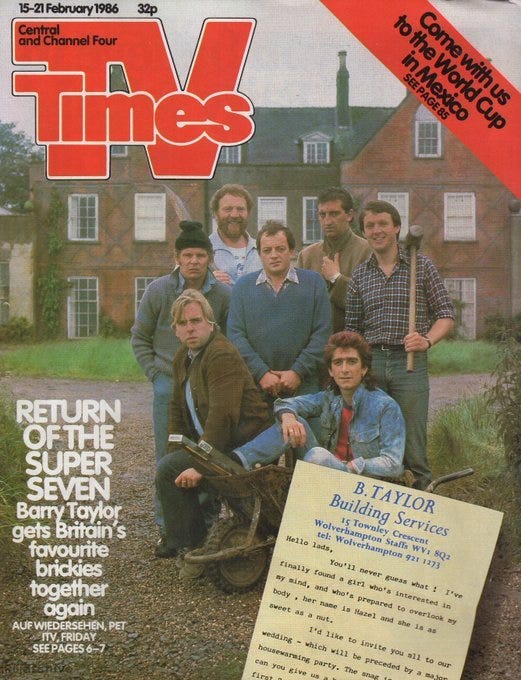
It was also interesting how the comedy and drama of the time showcased different perspectives of Thatcherism more generally; the Auf Wiedersehen Pet lads were skilled tradesmen, economic refugees from Northeast England, determinedly chasing employment in Europe, and trying to have a little fun along the way. In Boys From the Blackstuff, Yosser, Chrissie, Loggo et al were staying home and being ground down and literally driven mad by the hopelessness of (skilled) unemployment. (By 1984 there were well over 3 000 000 people out of work, the highest sustained unemployment in the UK since the Great Depression).


Del-Boy and Arthur Daly, on the other hand, seemed to thrive (perhaps in their own minds if not in the reality) in the merchant adventurer ‘who dares wins’ entrepreneurial spirit of the 1980s.

David Stubbs, writing in The Guardian in 2015, described the wide appeal of Arthur Daly. The same could probably be said about Derek Trotter;
“…To lefties, he hilariously exposes the shameless villainy of the Thatcherite entrepreneur; to Tories, he’s a hero of sorts, cheekily giving two fingers to the taxman. He is universally beloved…”


The Bill was written and acted with an emphasis on procedural authenticity and social realism, as we learn from Oliver’s books, the extensive oral histories at The Bill Podcast, and more in depth background on Oliver’s subscriber platform on Patreon. A recent and worthy addition to the Devonfire catalogue is Edward Kellett’s Reaching a Verdict: Reviewing The Bill 1983-1989, which brings to life the iconic characters and gives us a tangible sense of the era in which they lived and worked.
Although Only Fools often played for broad comedy, John Sullivan, creator and sole writer, also based many of the characters and their day to day lives on real people, places, events and attitudes. Throughout its run, Only Fools evolved from a standard half-hour sitcom into a believable family saga spanning generations, through victory and comical disaster, joy and tragedy, told in annual extended specials which routinely attracted over 20 million viewers.

The relentless trading culture, which often extended to a seller’s own posessions, furniture or household fittings, reverence for the family matriarch, and the gulf in ages between siblings, a consequence of the war, all reflected in John Sullivan’s world building. There were also many subtleties; even the three-wheeled Reliant Regal van represented the fact that almost every part of the Trotter family’s life had something, or someone, missing.

There was perhaps a little of the hustling trader in John Sullivan himself. He worked as a set dresser and scene shifter at the BBC, and on one occasion accosted leading producer Dennis Main Wilson in the BBC Club and told him that they would be working together soon. The producer asked on what programme, to which John Sullivan replied, “I don’t know, I haven’t written it yet.” In 1977, Dennis Main Wilson produced John Sullivan’s first project, Citizen Smith, starring Robert Lindsay.
See John Sullivan’s other writing credits at IMDb.
The commissioning of Only Fools was championed by BBC producer and director Ray Butt (1935-2013), whose father was a market trader and who, according to My London, also partly inspired the character of Del-Boy.
“…In the eighties people were talking about the black economy like it was something new but after the war it was all the rage. Market traders were all working for readies. They had this cash and there was no way they were going to declare all of it to the Inland Revenue. You had to declare something but basically the vast majority went straight into your bin and the taxman never saw it…” (Ray Butt)

Even some of the iconic moments that defined Only Fools and Horses had a basis in reality. When the lads are watching a hearse go by and Boycie says, “Albert, your minicab’s arrived”, this was a reflection of a real conversation John Sullivan had overhead in a pub. Possibly the most famous scene of all, the falling chandelier, was based on a real event related to John Sullivan by his father, as was Uncle Albert staging a fall through the pub cellar hatch in an attempt to claim compensation.
Both Only Fools and Horses and The Bill ran for more than two decades, ending in a very different country to the one in which they began; we watched the characters age in real time. In The Bill, we experienced favourite characters’ career triumphs and reverses, and later in the run, controversially, some of their own family and relationship sagas.
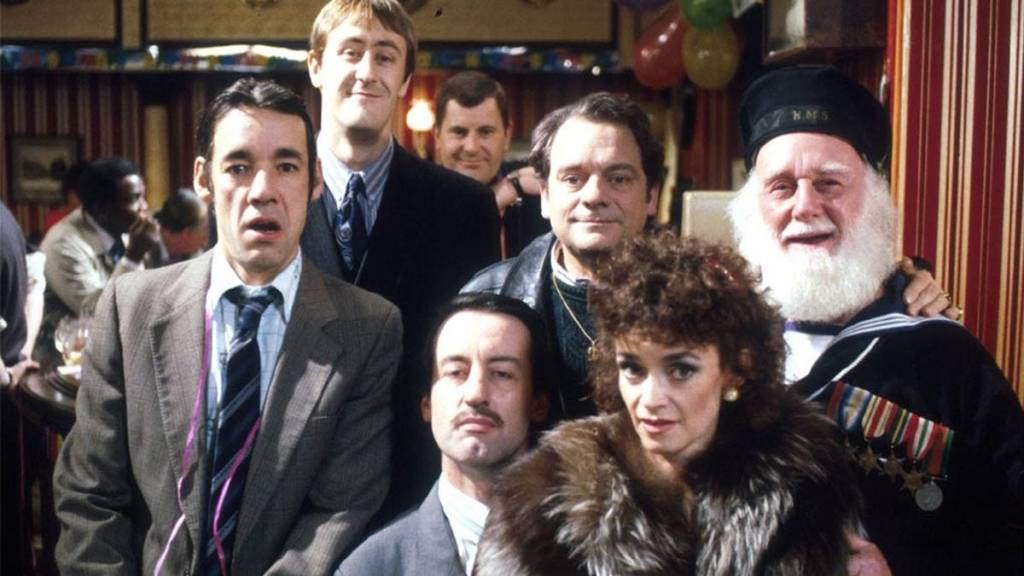
Characters in both series transcended the fourth wall, these felt like people that you knew. When actors in key roles passed away during the series’ run, the effect rippled well beyond their make-believe worlds: Lennard Pearce (Grandad), Buster Merryfield (Uncle Albert) and Kenneth MacDonald (Mike) in the case of Only Fools.
Kevin Lloyd (Detective Tosh Lines in The Bill) passed away in 1998, aged just 49, also Gary Holton (Wayne) in Auf Wiedersehen Pet, passed away suddenly during the filming of series two in 1985.
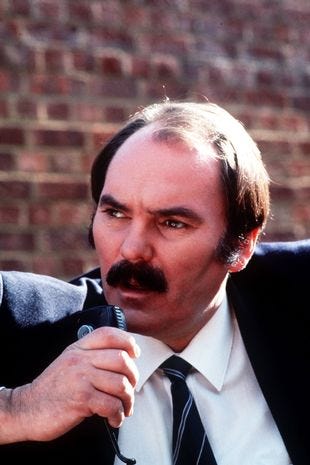
Almost all of the supporting cast of Only Fools made appearances in The Bill. (Actress Linda Regan once observed that The Bill was generally referred to as ‘National Service’).
There is a fascinating story about the casting of Roger Lloyd Pack (Trigger) in a 1991 episode of The Bill, The Negotiator, as told to The Bill Podcast.
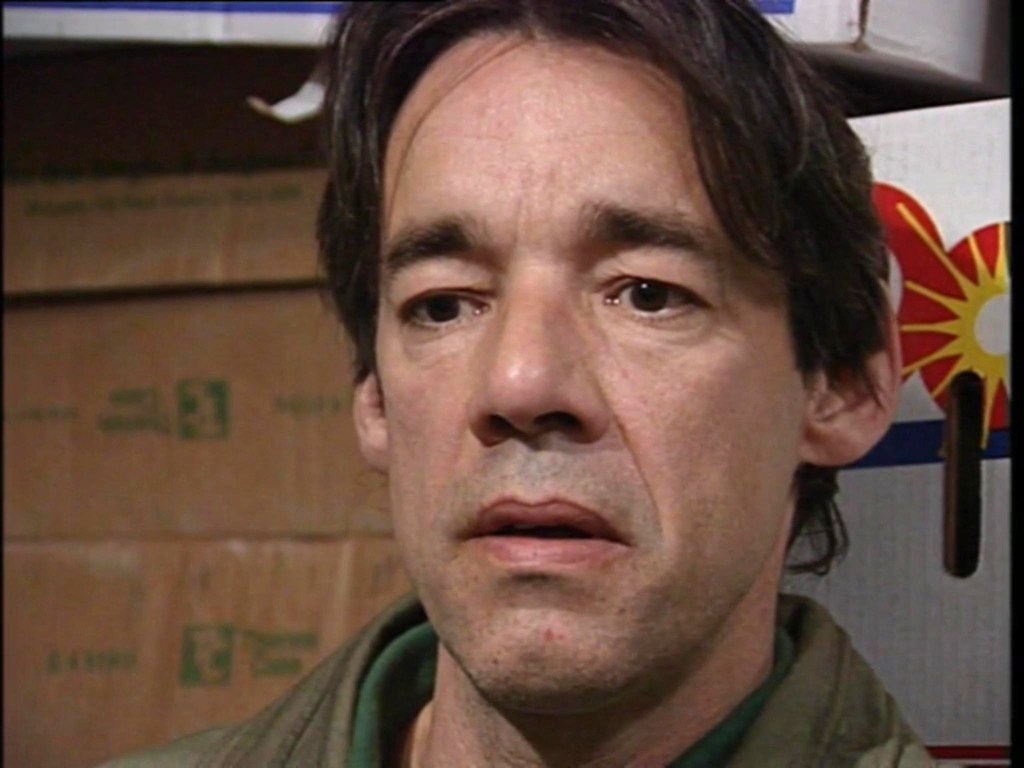
The Bill Podcast: Director Stuart Urban on casting Roger Lloyd Pack
It worked the other way as well, with The Bill stars Nula Conwell (Viv Martella) and Nick Stringer (PC Ron Smollett) having memorable roles in Only Fools – Nula Conwell was behind the bar in the Nag’s Head, and in fact had to decline appearing in the iconic To Hull and Back as The Bill producers would not release her. Nick Stringer played two characters five years apart, an unlucky buyer of a used car from Del, and then Jumbo, with whom Del-Boy almost emigrated to Australia. Both have been interviewed by Oliver as part of The Bill Podcast series.

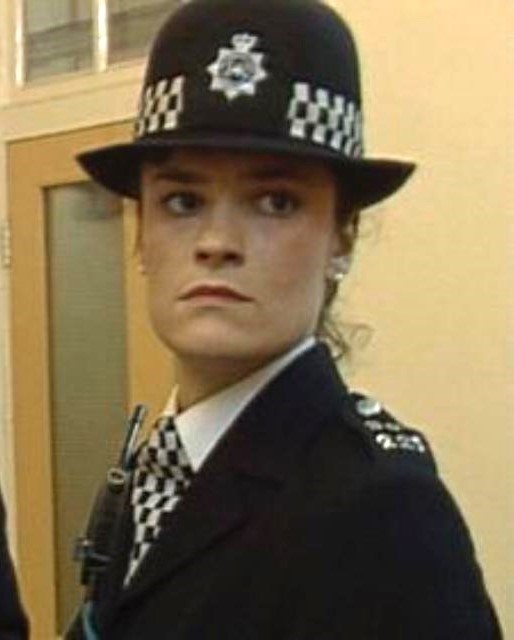

The Bill Podcast: Nula Conwell


The Bill Podcast: Nick Stringer (Part One)
The Bill Podcast: Nick Stringer (Part Two)
There is more on Nick Stringer’s appearances in Only Fools and Horses at My London.
Other regular or otherwise memorable faces from Only Fools and Horses appearing in the The Bill at least once (according to IMDb) included Tessa Peake-Jones (Raquel), Gwyneth Strong (Cassandra), Ben Smith (Damien), Kenneth MacDonald (Mike), Patrick Murray (Mickey Pearce), Paul Barber (Denzil), Diane Langton (June), and Roy Heather (Sid) who appeared no less than seven times between 1985 and 2003.

It’s also interesting to note that Billy Murray, later DS Don Beech in The Bill, was reportedly one of the actors originally in the frame for Del-Boy.

Catch up with Oliver’s latest projects on Twitter, Facebook and at Devonfire Books, and on our own community and (regularly updated) news pages.
The Bill Podcast is currently hosted by Natalie Roles, who played DS Debbie McAllister in nearly 200 episodes, and is more popular than ever, nudging the top 1% of most listened-to podcasts globally.

Letter From Helvetica
You can also hear two legends of The Bill, Andrew Mackintosh (DS Greig) and Natalie Roles (DS McAllister) in the Apple top 40 fiction podcast, Letter from Helvetica, produced by Oliver Crocker and available on all the major podcasting platforms.
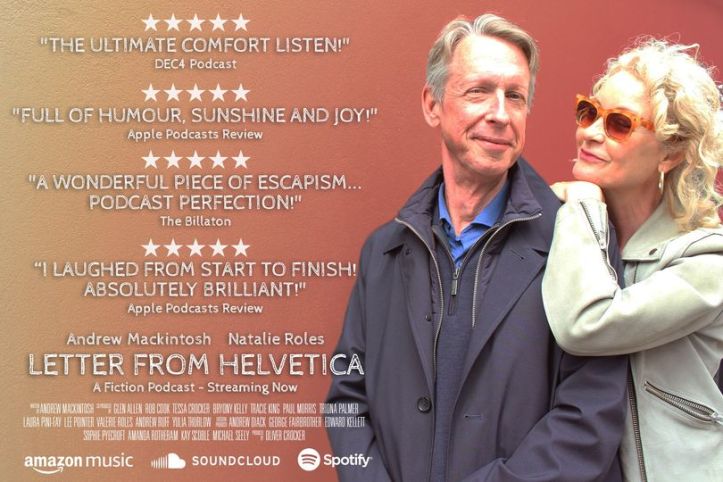


 The DEC4 Podcast by George Fairbrother