In this our second Elvis and the Press episode, we’re joined once again by our leading contributor, Gary Wells, to take a deep dive into the coverage of Elvis’ New Year’s Eve performance in Pittsburgh, Pennsylvania, at the end of 1976. This was the second consecutive New Year’s Eve Elvis had worked, with touring now continuing throughout winter by financial necessity. Elvis’ Pittsburgh show, concluding a very well-received, high energy tour over just five nights, proved to be a remarkable moment in time, and was widely considered one of the best performances of his later career.
Gary takes us through some of the show’s highlights, and we consider in detail a thoughtfully compiled review in the Pittsburgh Post-Gazette by music columnist, Mike Kalina, who observed that Elvis ‘had perhaps the most captive audience since Johnny Cash played Folsom Prison, and rarely did he lose his iron grip on the crowd during his 90 minutes on stage’.
We also go on to look at Mike Kalina’s eventful and very successful career as a food writer and cooking personality, and his sad passing in the midst of a professional scandal to which there appears to be much more than meets the eye.
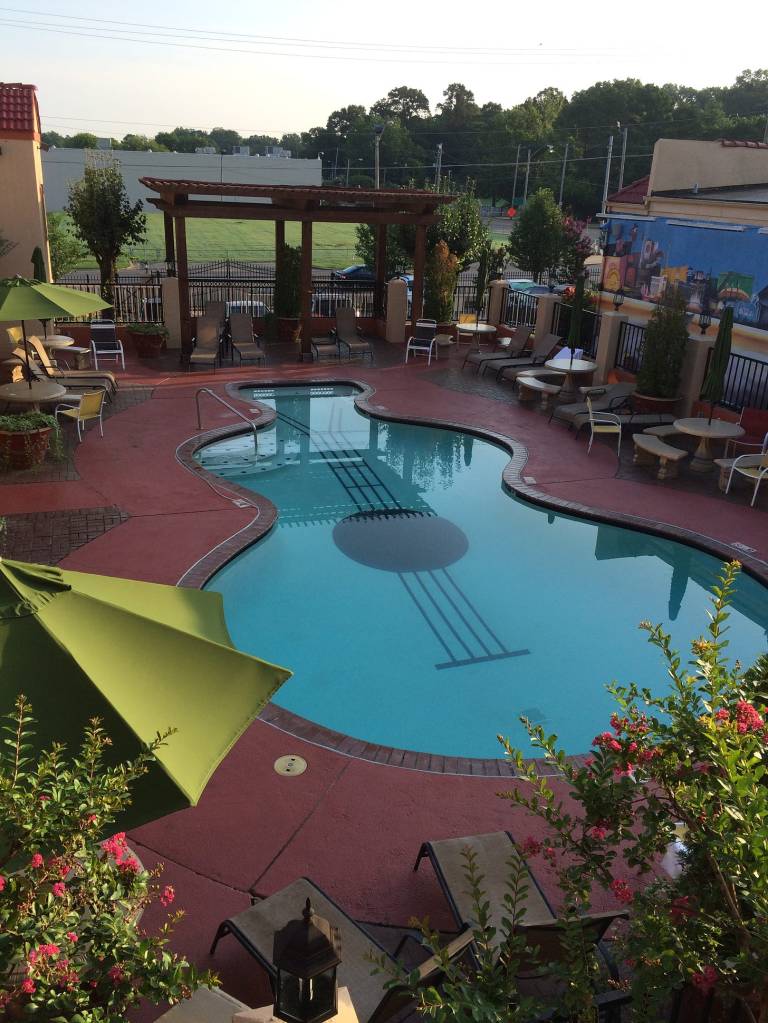
And in our post-credits segment right at the end, Gary recalls his most recent visit to Memphis, and what can only be described as an interesting stay at Days Inn, Elvis Presley Boulevard.
Listen on SoundCloud
Companion Newsletter
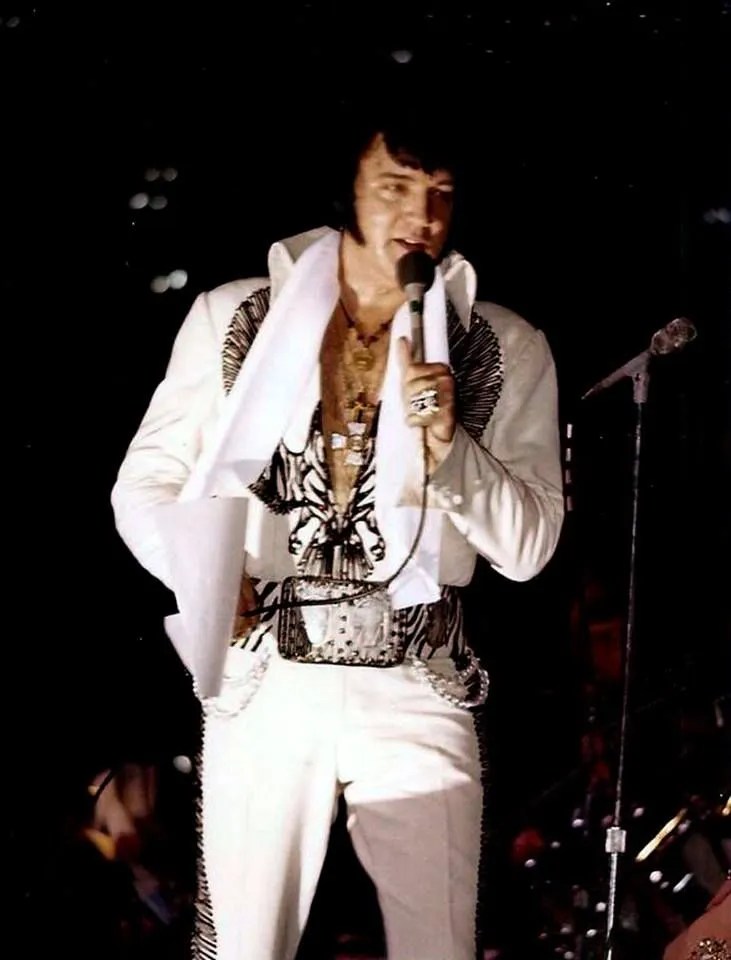
On his show in Birmingham, Alabama, two nights earlier, The Birmingham News wrote that ‘Elvis was in good voice, good shape, good health and good spirits. He had lost weight and gained confidence’.
The Year Before…
Although Elvis had worked during winter in Las Vegas and Hawaii, the first of two New Year concerts he performed (since 1955) was 1975-76; one night at the Silverdome, Pontiac, Michigan, sold out (or near enough) at 62 000, the biggest in-person audience he had ever played to on a single night. Newspaper reports of the time conveyed the excitement with the headlines, Elvis Still Shakes ’em Up, and The Legendary Elvis Dazzles New Year’s Eve Stadium Crowd. The $800 000 gross for the night also attracted widespread publicity, at that time a record for a single performance by a solo artist, while the time of year, and the unprecedented size of the venue, created a number of technical and other challenges.
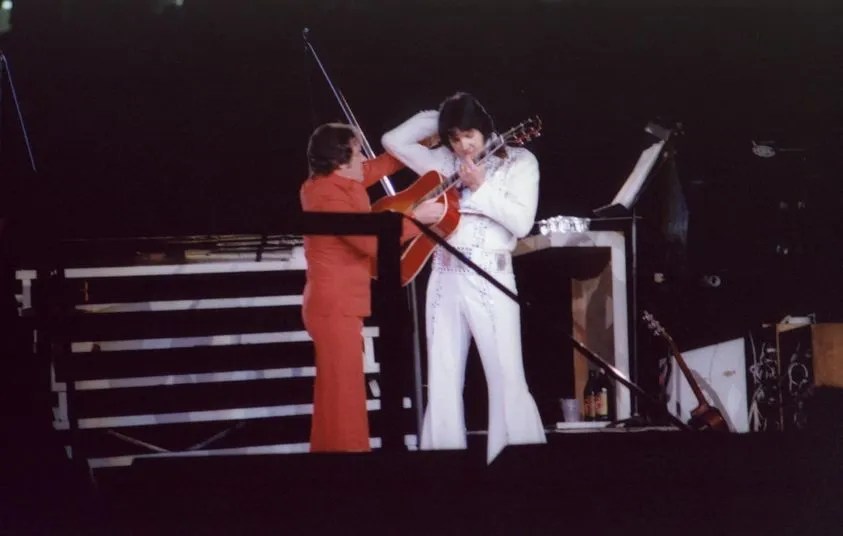
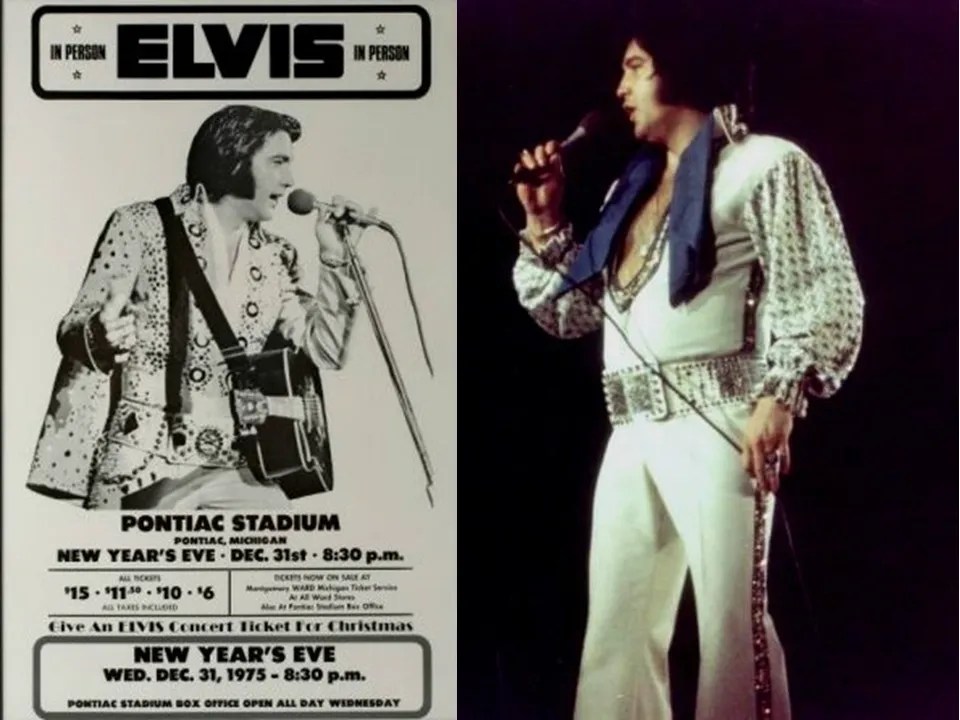
The harsh, freezing conditions were uncomfortable for everyone, while delayed and echoing sound in the stadium made it a challenge for Elvis, his band, orchestra and singers to keep it all together. This situation wasn’t helped by an unfamiliar setup which isolated Elvis on a catwalk several feet above the main stage. Biographer Peter Guralnick suggests that Elvis could not have pre-approved the design, as being slightly separated from his musicians prevented the close-up, unspoken communication which Elvis himself considered essential to a tight performance. Early in the show, Elvis tore the seat out of the ‘Rainfall’ jumpsuit and had to leave the stage for a quick change, but dealt with it with his customary good humour.
The patience of the audience was severely tested by some ticketing mix-ups in the form of duplicated seat numbers, the prevailing weather – one fan described conditions as ‘the worst ice-storm ever’ – and an extended pre-programme which included Colonel Parker’s side project, a bluegrass group named Bodie Mountain Express.
In typical self-deprecating style, Elvis recalled the Silverdome experience on stage in 1976, including the realisation that he hadn’t quite learned Auld Lang Syne well enough.
We have a little correspondence on the Pontiac show at the YouTube page. More than one person notes the treacherous weather, including this from DawnMarie;
“…Oh, we didn’t know if we were even going to make it! We get some pretty serious weather at times and that was definitely a year…It was a once in a lifetime thing…So happy I was there! The crowds were brutal though…It really amazes me how mean & completely crazy women acted & were being that night. All out cat brawl 10 rows down ahead of us! Broken ribs & blood loss is all I heard from the paramedics (and) Elvis had already (left the building). Insane night that’s for sure…”
From Debbie:
“…I was there in the second last row of that huge auditorium. Needless to say that we needed our binoculars to see him but it didn’t matter we were with the King – Elvis on New Years Eve..!”
Pittsburgh, December 31st, 1976
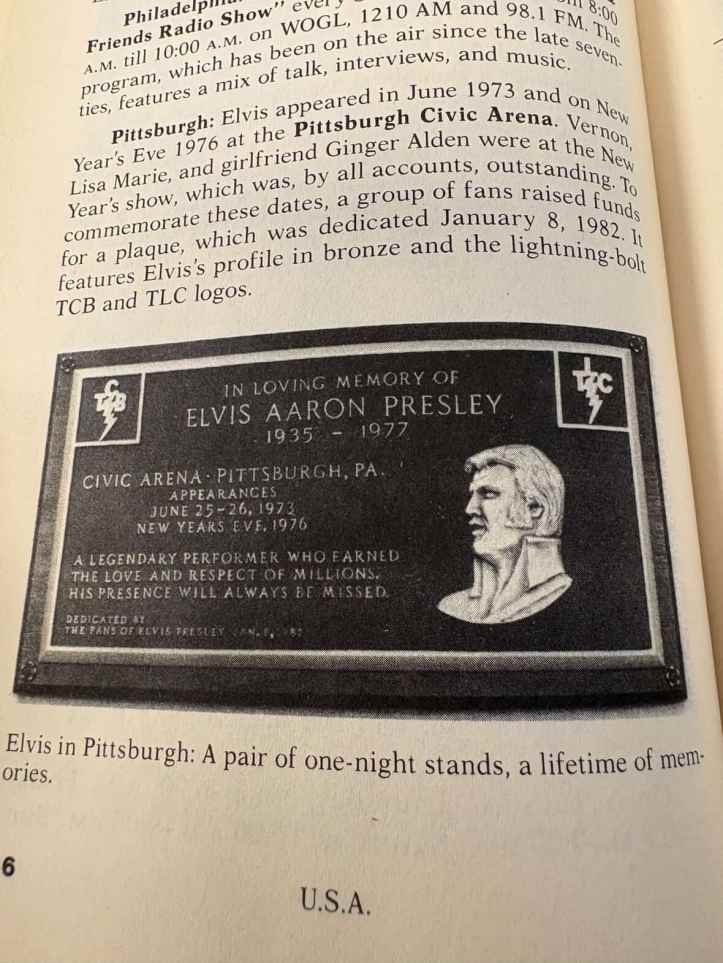
The following year, Elvis was back in a more familiar sized setting, the Pittsburgh Civic Arena, playing to sold-out audience of 16 409. It was the third time Elvis had appeared there, the other occasions being two consecutive nights in the Summer of 1973, a fact reviewer Mike Kalina notes in his report for the Pittsburgh Post-Gazette.
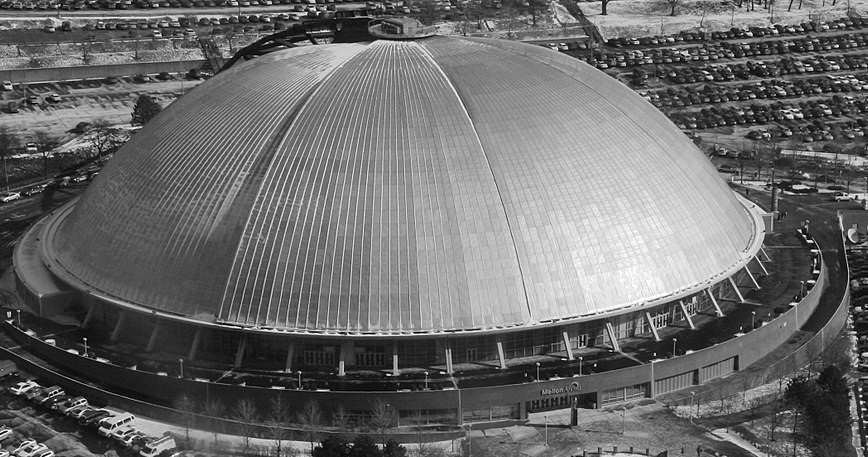
This New Year’s Eve event concluded a brief, frenetic, five-night tour that began on December 27th. During the course of the year, Elvis had played a total of 127 shows from nine road tours as well as what would be his final Lake Tahoe and Las Vegas residencies.
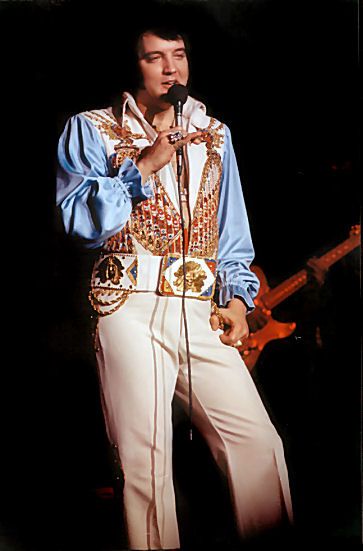
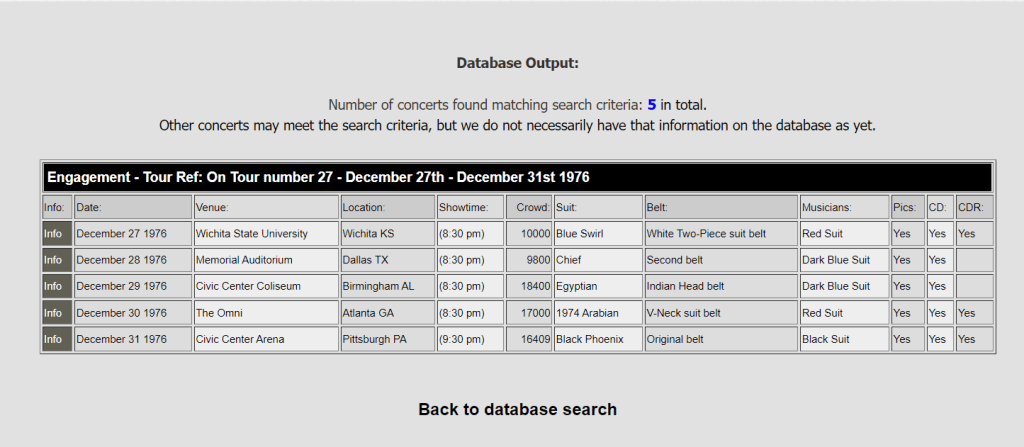
Elvis was in fine, energetic form for this final tour of 1976, with local press overwhelmingly positive and at times ecstatic, with headlines including ‘Magnetic Elvis Can Still Thrill Audience’ and ‘Elvis Is Back – Slimmer, Healthier Presley Shows Adoring Fans He’s In Top Form Again’.
Find the complete review transcripts at the elvisconcerts.com 1976 press archive.
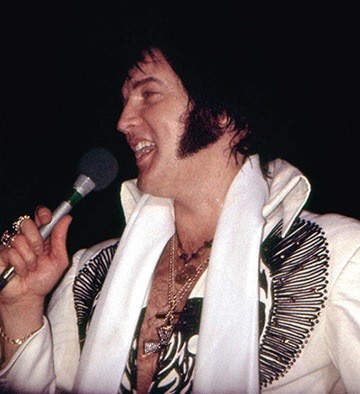
The jumpsuit bringing in the New Year was the black-on-white phoenix, one example of a design encompassing various colour combinations, used between 1974 and 76. It’s interesting to note that the original concept wasn’t for a bird at all, as Gene Doucette, Bill Belew’s design associate, recalled in an interview with The Guardian in 2010;
“…I remember once I was working on a bunch of ideas and Elvis was impatient so asked, through his assistant’s assistant’s assistant, could he see some samples. I was making a jungle-themed suit at this point – vines, serpents, elephants – so I sent him a sample that featured a zebra’s head on it. I heard back, ‘Elvis loves it, but wonders why you’ve made the feet on the bird so small’. I had no idea what they were talking about, until I realised that when you looked at the zebra upside down, it kind of did resemble a bird. What could I do, it’s Elvis? I just widened the zebra’s nose, changed its feet to ears and reworked the shape and it became a Phoenix. Then I hear back: ‘Elvis loves them, can you do five more in different colours?’…”
In keeping with the general standards of the tour, Pittsburgh is widely seen as one of the high points of Elvis’ later career, with a wild and responsive audience having a great time, and it wasn’t just the women getting a little overexcited, as you can hear in the audience recording. It was a packed show that ran to around 90 minutes, with an interesting and varied set-list and great vibe throughout.
This audio presentation is an audience recording, but with good and clear sound. (It’s worth mentioning that there are other versions of this show to be found on YouTube with accompanying amateur vision as well).
We discuss some of the show’s highlights during the podcast, including Big Boss Man, Fairytale, My Way, an impromptu Reconsider Baby, and Rags to Riches which Elvis belts out at the piano, as well as an endearingly comical Are You Lonesome Tonight? with Elvis singing directly to Charlie Hodge, who couldn’t escape as he was holding Elvis’ mic while Elvis played acoustic guitar.
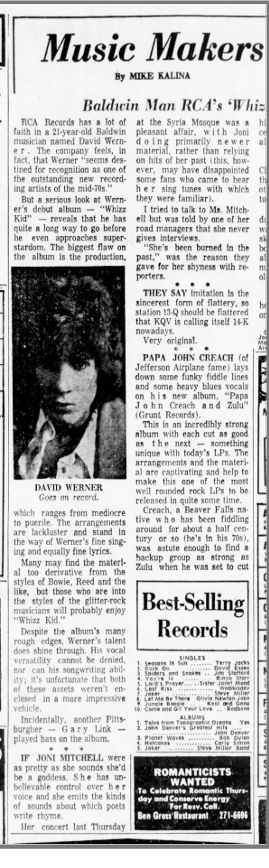
As we learned in our previous Elvis and the Press episode, there was no media access of any kind granted on tour, no hospitality, no interviews, and reporters had to secure their own tickets otherwise would not be let into the arenas. The Pittsburgh Post-Gazette journalist tasked to review our New Year’s Eve show was a music and features columnist, and later food writer, restaurant critic and TV personality named Mike Kalina, who offered a thoughtful, honest and interesting account of Elvis’ performance.

Concert Draws 16,409: Elvis Rings In ’77 at the Civic Arena (By Mike Kalina)
While Pittsburghers rang in the New Year Friday night in front of their TV sets with Guy Lombardo, 16,409 others scorned 1977 with Elvis Presley at the Civic Arena. After three opening acts and a lengthy intermission, Presley landed on stage 35 minutes before midnight, but you would have thought the clock had struck 12. He received an ear-deafening ovation punctuated by thousands of blasts from flash bulbs and a patchwork of “We-Love-You-Elvis” signs hoisted aloft.
Presley had perhaps the most captive audience since Johnny Cash played Folsom Prison. And rarely did he lose his iron grip on the crowd during his 90 minutes on stage.
Presley was much warmer than on his first visit here in mid-1973. This time he not only interacted with the crowd, but he also even gave up the microphone for a minute or so to have a fan wish him happy birthday (actually, he will be 42 on Saturday) and happy New Year. He also snapped dozens of gifts from those who had come to pay homage to him. He gave out 42 scarves and, believe it or not, even took requests. He also was in better voice on this Pittsburgh visit, singing surprisingly well and in a lower register that gave more impact to his phrasing. He even ventured into difficult musical areas, hitting notes that could cause a mild hernia. And after they drew a good crowd reaction, he offered them in a reprise that was tantamount to masochism.
His material offered few surprises and featured a mix of new material and the rock standards associated with him (“Hound Dog,” “Jailhouse Rock”). He seemed more comfortable doing his newer material and handled it excellently. He also played the acoustic guitar (but not very well) and did a few songs while accompanying himself on piano. In this segment “Unchained Melody” was the standout.
The old Elvis moves also were exhibited but by now are such a cliche that they were inadvertently humorous. Presley is not a young man anymore. His physique is starting to sag, his face fleshy and pale, his eyes puffy, and when he tries to repeat moves he made on the Ed Sullivan Show two decades ago, the effect is a self-parody. But the hordes of fans loved his every shake, rattle and roll and squealed with delight when vestiges of the old “Elvis the Pelvis” shined through. Presley surrounded himself with some of the finest musicians on the rock circuit today, including James Burton on lead guitar and drummer Ronnie Tutt, who is probably the best rock drummer in the world. In addition to a tight electric band, Presley was backed by the predominantly brass James Guercio Orchestra and 10 backup singers – including opening acts the Sweet Inspirations and the Stamps Quartet. Presley has a rapport with his musicians unlike any other star. They look as though they hold his every move in awe. If he casts a hard glance at one, the musician’s face is glazed with pain. If Elvis smiles at him, the sideman’s face lights up like a kid’s on Christmas morning. Charlie Hodge, Presley’s water-boy and scarf-boy, related to the star like a stone quarryman relates to a sculpture. To watch his interaction with Presley was worth the price of admission alone.
At the stroke of midnight, the house lights went up and Elvis led the crowd in singing “Auld Lang Syne.” There were some brief huzzahs from the crowd but in a few minutes Presley was back singing. Overall, it was a fine show, though Presley seems to have lost some of the spark that turned his concerts of yesterday into events. He worked hard, but underneath it all one could see that age is taking its toll on the singer. A change in style seems to be the logical career move for him – but Presley seems intent on showing the world that a middle-aged man can rock and roll, too. A famous country artist once said that you can grow old as a country singer but not as a rock singer. Presley is trying to prove him wrong, but he’s not succeeding.
One of the fascinating points to note, in the current context, is Mike Kalina’s take on Elvis’ age (about to turn 42), and the assertion that you can grow old as a country singer but not as a rock singer. Many of the artists on the touring circuit in Elvis’ time are still touring nearly half a century on, and still playing big venues to loyal audiences. This year (2024) has seen tours by many rock and roll bands and artists on either side of the age of eighty, including the Rolling Stones, Neil Young, Billy Joel, Bruce Springsteen, Al Jardine and Mike Love providing two very different Beach Boys experiences, Status Quo, ACDC, Blondie, John Fogerty (Creedence Clearwater Revival), and the Steve Miller Band.
Mike Kalina subsequently changed direction professionally, and went from writing about music to establishing himself as a popular food writer and restaurant critic, author, and TV cooking personality on PBS.
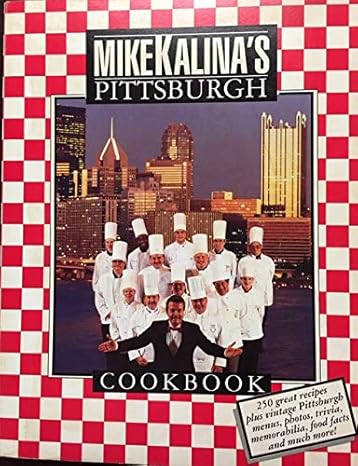
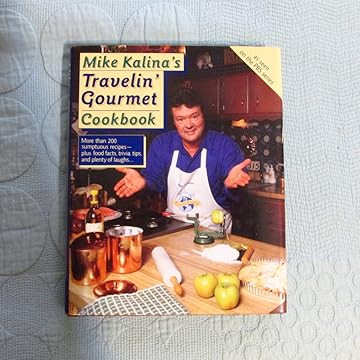
At the height of his success, it emerged that he was being investigated by the US Attorney in Pittsburgh over taking money for favourable restaurant reviews with the help of an accomplice, a restaurant consultant named Lou Adams, and that a Grand Jury had been convened. It appears that the investigation was initiated following a complaint from an aggrieved restaurateur who, unfortunately for Mike Kalina, was politically connected to the Pittsburgh US Attorney. You can read more about this in the ‘Additional Links’ section below, including detailed reporting in The LA Times and from UPI.
Mike Kalina sadly took his own life in 1992, having apparently received bad news from his doctor, and having discovered he was under investigation. He had been recently married and had an infant daughter. It’s important to note that none of the allegations against him were ever proven.
According to UPI, citing the Pittsburgh Post-Gazette;
“…Federal prosecutors hoped to prove Pittsburgh Post-Gazette restaurant critic Mike Kalina was selling favorable reviews so they could pressure him and an associate into cooperating with an investigation of organized crime and local restaurants…”
UPI also reported that both Kalina and his associate had been cleared of having any personal or business dealings with ‘several reputed associates of western Pennsylvania’s La Rocca/Genovese organised crime family’.
The few days between Christmas and New Year 1976 represented a fascinating, joyous and poignant moment in time. After a rollercoaster year, Elvis’ work on this tour, and especially New Year’s Eve, must have infused his family, Colonel Parker, his band, and everyone around him with a great sense of optimism for the future. As Gary says, ‘the fact that he could still put on a show like this is a gift to us, all these years later’. We’re also deeply indebted to the enterprising bootleggers, without whom this show, and so many of Elvis’ performances throughout the seventies, would be lost.
We do hope you enjoyed our journey back to the New Year of 1976-77.
Very special thanks to Gary Wells, and to all our readers and listeners.
Sample Shorts
Additional Links
We note in the podcast that midwinter touring was, by the end of 1975, a financial necessity. In terms of comparison to previous years, we’re referring to the 1969-76 live performance schedule. Elvis did work over winter and New Year in his earliest years on the road. There is more information about this period at the 1954-61 database at elvisconcerts.com
Myron Thomas ‘Mike’ Kalina – Find a Grave
Mike Kalina: LA Times Obituary
(It looks like there are a couple of free reads in the LA Times without the paywall kicking in)
UPI: Restaurant Critic Investigated for Alleged Mob Ties
Mike Kalina – Featured on Joni Mitchell (Official)
Remembering Pittsburgh Civic Arena (WYEP)
Gary Wells – Walking in Memphis 2024
An Interview with Francesc Lopez – Founding Webmaster of elvisconcerts.com
Remembering Kris Kristofferson;
DEC4 Podcast – From Memphis to Vegas: A Vintage Leisure Tour
Elvis in the 70s – A YouTube playlist of unofficial audience and soundboard recordings
(Uploads containing copyrighted material are not monetised. Any advertising revenue reverts to music rights holders)
 The DEC4 Podcast by George Fairbrother
Very special thanks to one of our listeners, Steve R on YouTube, who told us that the fan who was invited onto the stage (find this moment from 25:45 in the YouTube version of the podcast), was ‘Jim E Curtain’. A Google search came up with an Elvis tribute artist, Jim ‘E’ Curtin (who passed away in 2011), and who seems to fit the bill;
https://www.delcotimes.com/2011/07/08/entertainer-jim-e-curtin-remembered/
Interesting quote from the article;
“…In addition to his music, Curtin was known for his massive collection of Elvis memorabilia – often referred to as the world’s largest. His prized possession was a mirrored white jumpsuit he said Elvis gave him in 1975 during one of the several chats Curtin is said to have had with Presley in the 1970s…”
LikeLike