Updated & Expanded October 2026
A very warm welcome to the first episode in our occasional series, the Elvis History Vault; our leading contributor, Gary Wells (soulrideblog.com), is along for the ride as we learn about some perhaps lesser known people and events in Elvis’ professional life.
This time, we remember tour photographer Bob Heis, discuss how it was almost business as usual in Las Vegas in 1978 thanks to Colonel Parker and concert promoter Jerry Weintraub, and learn about an important member of Elvis’ touring party, Jerome ‘Stump’ Monroe. Gary also explains how a remarkable songwriting career blossomed after a chance meeting with the TCB Band on tour.
October 2026 update;
We retained some content from our first recording session for a couple of future Elvis History Vault episodes, however then decided on a slight change in format, so we’ve added the additional clips to this page with some supporting images and information in the ‘Extras’ section below. We look at the iconic ‘sundial’ jumpsuit which became synonymous with Elvis’ final months on the road, and learn about innovative sound engineer and Lisa Marie pilot Bruce Jackson. We also examine a seven year legal battle over concert ticket refunds in the wake of Elvis’ passing, the Presley Estate and Jerry Weintraub Vs the Mid-South Coliseum, and discover an unfinished 1977 jumpsuit.
Remembering Tour Photographer Bob Heis

Bob Heis (1942-2012) was a military veteran, Elvis fan club administrator and professional photographer who captured many great closeups of Elvis on stage in the 1970s, from around 40 concerts, including Madison Square Garden, Pittsburgh, PA (New Year 76-77), and Elvis’ final show in Indianapolis.

He is justly immortalised on the original 1972 As Recorded at Madison Square Garden album; having sent a note backstage requesting Polk Salad Annie (which was probably on the setlist anyway), Elvis gives him a little acknowledgment, “Okay, Bob!”, at the beginning of the song, which you can hear in the embedded recording thanks to the official Elvis YouTube channel.
Always Elvis: Business as Usual in Las Vegas, September 1978
Elvis’ sudden passing on August 16th, 1977 left a number of unfulfilled professional engagements beyond the tour due to start the following day. Further arena shows were being scheduled, and later that year, he was booked to open a new 5 000 seat showroom at the Las Vegas Hilton, the Hilton Pavilion.
And then, in September 1978…
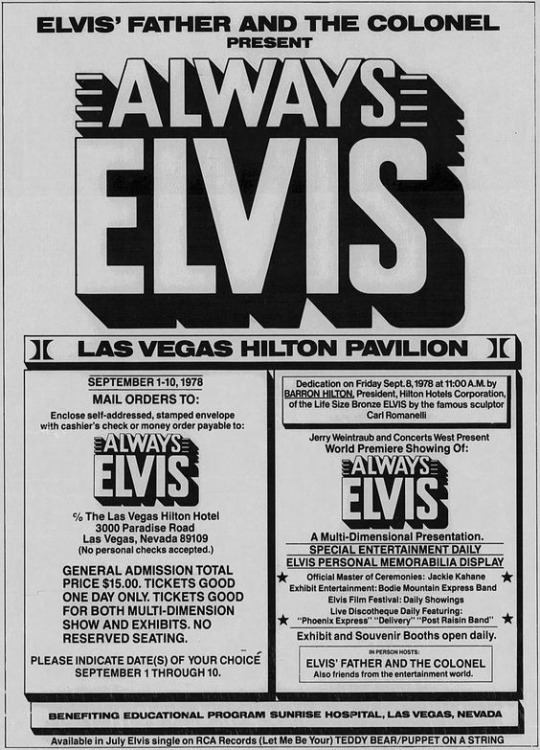
The late British-Australian writer and commentator, Clive James, in his landmark series Fame in the 20th Century (BBC 1993), observed just how much easier Elvis was to market once his ‘troubled physical presence’ was out of the way. So, was this Always Elvis event a fitting tribute and a gesture of generosity in providing something meaningful for the fans, or a cynical and discomfiting attempt at ‘business as usual’? Gary helps us to put things into perspective.
Remembering Jerome ‘Stump’ Monroe
Numerous sources on social media mark the passing of drummer Jerome ‘Stump’ Monroe in January of this year (2026).
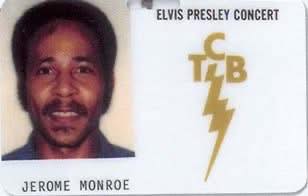
Jerome Monroe was a popular and important member of Elvis’ touring operation as drummer for the Sweet Inspirations. He also played with the orchestra and the Stamps in the pre-intermission segment of the show, and occasionally worked as part of Elvis’ personal security detail. He had the distinction of being at every Elvis show, in Las Vegas and on tour, from 1969-77.
He played behind Elvis on three occasions in the seventies, including during the final tour, on June 24th, 1977 in Madison, Wisconsin, after Ronnie Tutt departed abruptly owing to a family emergency. (Larrie Londin was flown in for the final two nights in Cincinnati and Indianapolis).
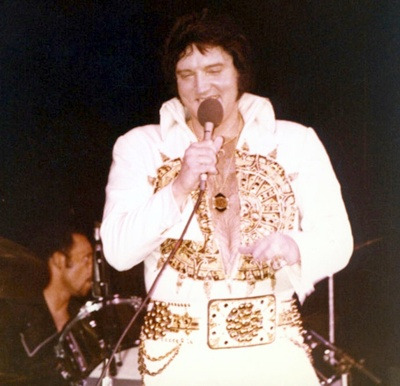

In a 2011 interview, Jerome Monroe told the Elvis Information Network website that he only found out he would be playing for Elvis that night during the intermission.
“…That was a scary day. I was very, very nervous…Elvis came up to me and said, ‘You can do it, Stump’, and I’m looking at him saying this man’s got more faith in me than I have in myself…”
Jerome ‘Stump’ Monroe (so named for his short stature as a child) played for the Sweet Inspirations for 12 years, despite never being formally contracted (he joked that he never got hired and never got fired). His distinguished career as a musician also included playing for Sam Cooke, Otis Redding, Martha Reeves and The Vandellas, James Brown, Wilson Pickett, Little Richard and Rick Nelson. In the 2000s, Jerome Monroe was living in Las Vegas and part of an R&B covers band called A Touch of Silk.
On playing for Elvis, he said;
“…I just thought I was doing my job and getting on with the show and doing the best job I could do ‘cos I respected Elvis and loved him like an Icon – he didn’t treat me like he was an Icon, he treated me like he was a friend…”
Ronnie Milsap & Kye Fleming
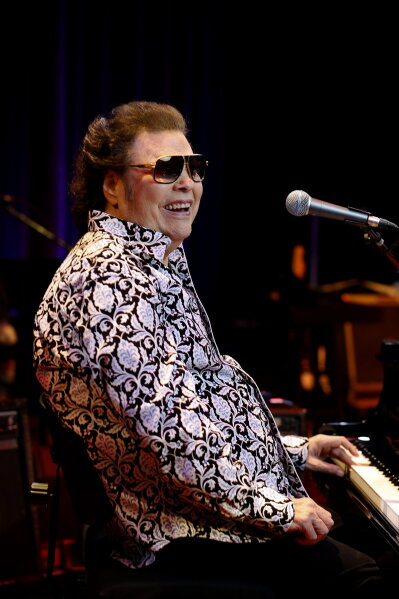

Our discussion on Ronnie Milsap, Rhonda ‘Kye’ Fleming and their Elvis connection was inspired by Gary’s recent article which is a thoroughly recommended read on his website.
Extras
Clips:
The sundial jumpsuit | Sound engineer and Lisa Marie pilot Bruce Jackson | The Presley Estate and Jerry Weintraub Vs the Mid-South Coliseum | The 1977 unfinished jumpsuit.
A Little Jumpsuit History
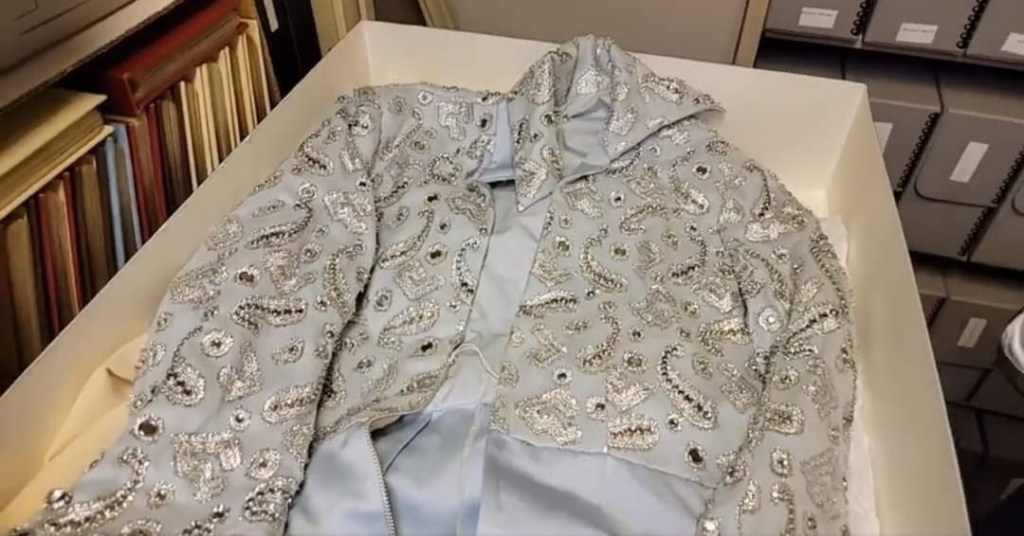
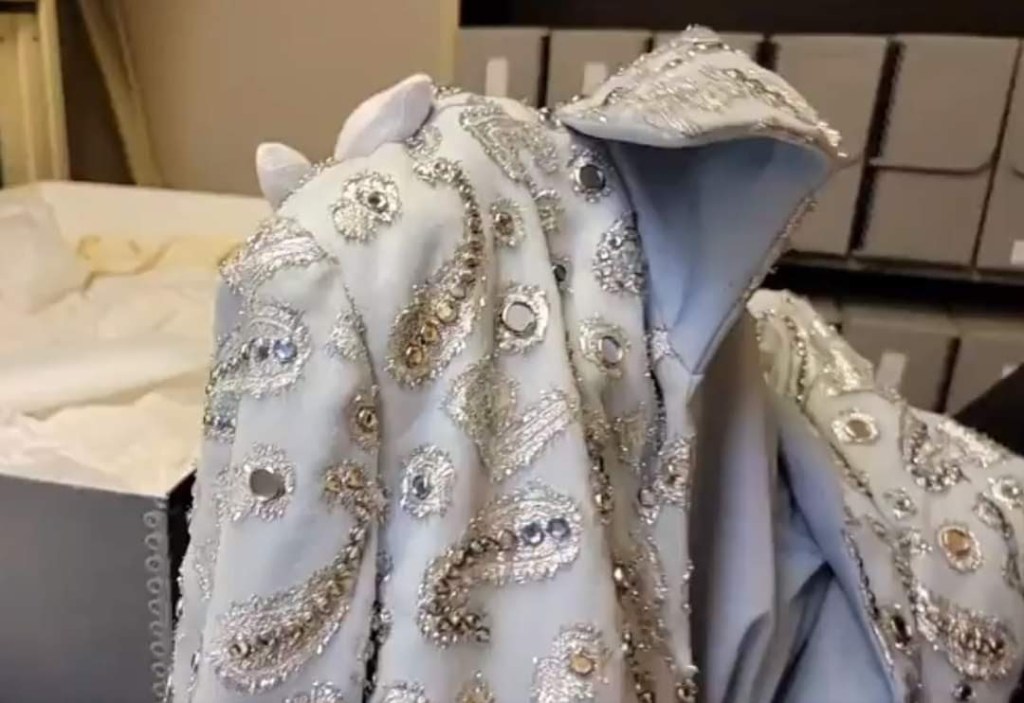
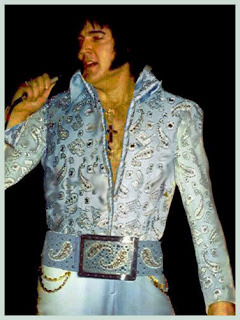
Images of the 1977 unfinished jumpsuit above are credited to Kathy Combess on Tumblr; the impression of Elvis in the new suit, dated 2006, is credited to ‘Skelvis’.
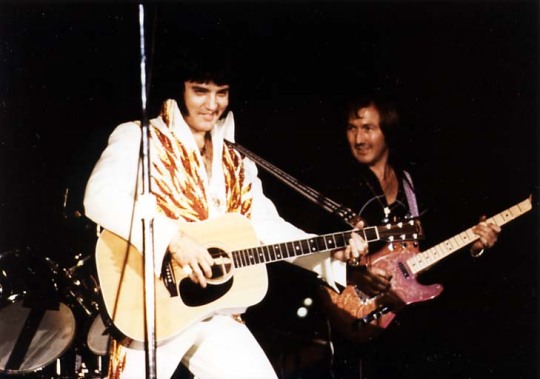
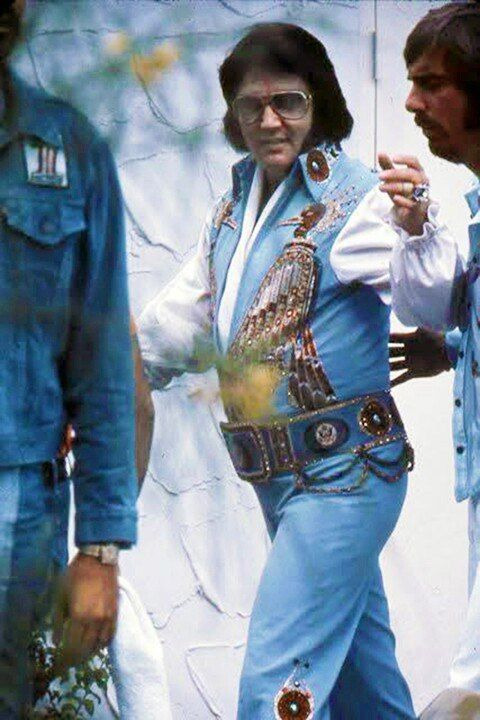
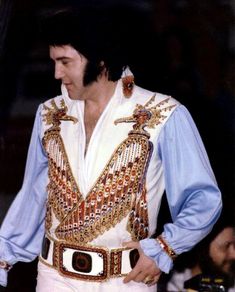
We learn, thanks to Francesc Lopez, that prior to the blue, light-reflecting suit that was unfinished at the time of Elvis’ passing, the final suits made for Elvis in his lifetime were the 1976 flame style, and the two styles of ‘Egyptian Bird’ or ‘Bicentennial’ suit.
The two variations of the ‘Bicentennial’ suit were worn 68 times from a schedule of 127 shows in 1976 – the flame style just twice.
Learn more about the history Elvis’ unique stage attire at the jumpsuit index at elvisconcerts.com
Presley Estate Vs City of Memphis (Mid-South Coliseum)
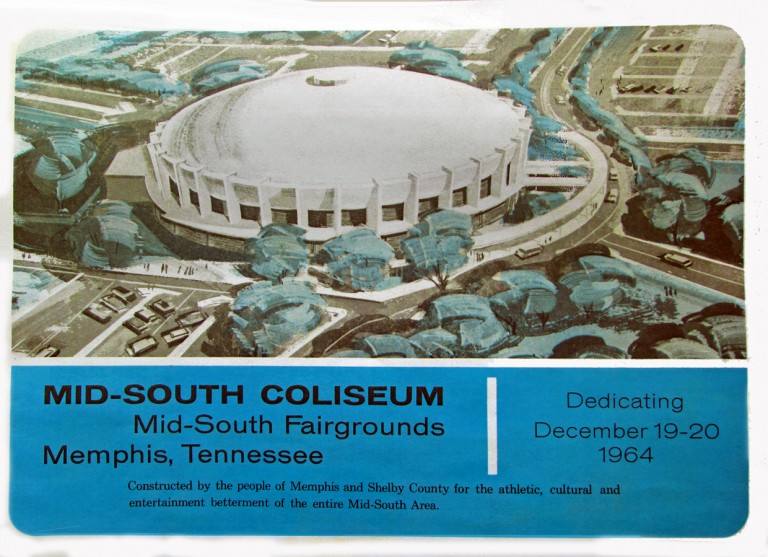
Elvis was initially due to conclude his August 1977 tour, scheduled to begin in Portland, Maine, on August 17th, with a hometown show at the Mid-South Coliseum, Memphis, on August 27th. Tickets to the Memphis concert were offered by mail-order as per usual practice, and such was the demand that a second show was added for the 28th.
A total of 22 000 tickets had been sold by August 16th when Elvis passed away, and then the rather complicated process of refunds had to be addressed.
There were initially only around 2 000 letters seeking refunds, and many ticket holders requested that the money be donated to Memphis charities in honour of Elvis’ philanthropy. According to the Memphis Public Library, which holds many of the refund letters as part of its Mid-South Coliseum collection, by 1982 nearly half of the $325 000 of ticket proceeds was still unclaimed. The Presley Estate, and the tour promoter Jerry Weintraub, issued legal proceedings to try and claim the outstanding amount for themselves, which had been held by the Mid-South Coliseum management.
The case took seven years, and in 1989, the appellate court finally adjudicated that the money belonged to the ticket-holders and no one else. The Coliseum was granted some reasonable expenses, but was directed to forfeit the unclaimed ticket money (and interest) to the County, which would then attempt to repay the ticket-holders.

We rely heavily on the incredible resource that is elvisconcerts.com. Read our interview with founding webmaster Francesc Lopez, updated for the 30th anniversary, here.
We hope you enjoyed this first Elvis History Vault episode. Future instalments will appear, from time to time, on this site, on YouTube, Substack, or keep an ear out for us on your preferred podcast provider.
Special thanks to Gary Wells, to Francesc Lopez, and to all our readers and listeners.
Please help us to maintain our page quality by reporting any malfunctioning or redundant links.


We received some correspondence from a listener on YouTube, relating to Bob Heis and Madison Square Garden. Our listener argues that Elvis was actually saying ‘Cape off’ to Charlie Hodge rather than ‘OK, Bob’, and that this is apparent in some film footage. We’re more than satisfied with our take on it, thanks in no small part to Bob Heis’ own first hand account, but we’re always grateful for feedback and we’ll leave this here for people to make up their own mind.
LikeLike