A very warm welcome to the second episode in our occasional series, the Elvis History Vault, where we learn about some perhaps lesser known people and events in Elvis’ professional life. This time, we go back to 1976 with our leading contributor, Gary Wells, to discuss Presley’s Center Courts, an ill-fated business venture Elvis became embroiled in thanks to Joe Esposito and Dr George Nichopoulos. We then look a little deeper into the ethically questionable doctor-patient relationship between Dr Nichopoulos and Elvis, and consider the legacy of another of Elvis’ go-to medics, Las Vegas physician and medical entrepreneur, Dr Elias Ghanem.
We also look more generally at contemporary perceptions of Elvis’ health trajectory and if the inevitable reality was masked by a combination of continued success, dependency, denial and wishful thinking.
Previous episode update:
In October (2026) we updated and expanded episode one in this series with some additional clips and background content. We look at the iconic ‘sundial’ jumpsuit which became synonymous with Elvis’ final months on the road, and learn about innovative sound engineer and Lisa Marie pilot Bruce Jackson. We also examine a seven year legal battle over concert ticket refunds in the wake of Elvis’ passing, Presley Estate and Jerry Weintraub Vs the Mid-South Coliseum, and discover an unfinished 1977 jumpsuit.
Presley’s Center Courts
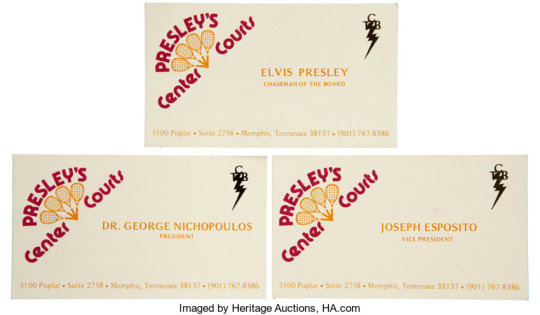
The plan, as we discuss in the podcast, was for a nationwide chain of branded, upmarket racquetball and spa facilities for which Elvis would lend his name and in return receive 25 percent of the company. The principals of the new venture were Doctor Nichopoulos, Joe Esposito and a Memphis property developer named Mike McMahon.
Elvis was assured it was a risk free commitment and a good long term prospect requiring no cash investment on his part, and in spite of some cautionary words from Colonel Parker to the effect that nobody gets 25 percent of something for doing nothing, Elvis signed up.
We’ve referred to definitive Elvis biographer Peter Guralnick’s work for details of how this venture unfolded. Gary has written a review of his most recent book, The Colonel and The King, however for this episode we’ve relied on Mr Guralnick’s earlier acclaimed biography, Careless Love: The Unmaking of Elvis Presley. We consider Peter Guralnick a totally trusted source owing to his unmatched access to primary sources and firsthand accounts.
Read Gary’s article here;
On Presley’s Center Courts, Peter Guralnick wrote;
“…They had broken ground on the Memphis and Nashville clubs in the middle of April (1976) …but then things started to go wrong, as McMahon claimed that Elvis had to put up money for a buyout of the leases on the two buildings currently under construction, and when Elvis balked, informed him that by becoming 25 percent owner of the corporation, he was liable for 25 percent of its debts…”
Compounding Elvis’ mounting sense of alarm, he became aware that that McMahon had apparently been taking a salary and was funding a company car from the Presley’s Center Courts bank account, despite assurances from Nichopoulos that no one would be taking anything out until the business showed a profit. Elvis then appealed to Colonel Parker for help, but Parker reminded Elvis that he had been against the whole affair from the start and that it was too late for any intervention. With Elvis increasingly distraught and no doubt feeling betrayed and alone, things escalated. In a late night and not entirely coherent phone call to McMahon, with whom the relationship had to this point been cordial, Elvis vented his anger, and even allegedly threatened to kill him. Nichopoulos mediated, explaining to McMahon that irrational rage was a side effect of Elvis’ medication regime, and that Elvis would soon calm down. Nichopoulos himself received an angry late night call during which Elvis fired him.
Through his lawyers, Elvis subsequently withdrew his support for Presley’s Center Courts and instructed that his name be removed from the project. Following some legal manoeuvres, it appears that Elvis did pay some compensation to the racquetball company and loaned them around 40 000 dollars on top of 25 000 dollars damages, and the business continued without Elvis’ name until it folded in 1981. (The loan was apparently repaid promptly).
Nichopoulos was soon forgiven, as was Joe Esposito, but here we plunge even further into an ethical nightmare in terms what should be the uniquely pure relationship between doctor and patient. The following year Elvis loaned a further 55 000 dollars to Nichopoulos, on top of an existing loan of 200 000 dollars, as the doctor was struggling with debt over a lavish new home. We consider the obvious question of how Nichopoulos could offer any kind of objective medical care to a patient with, amongst other health issues, an addiction to potentially dangerous prescribed medication, and how he got away with it for so long.
The law did, however, eventually catch up with him. To a point. According to the New York Times;
“…In 1980 Dr. Nichopoulos was indicted on 14 counts of overprescribing stimulants, depressants and painkillers for Presley, the singer Jerry Lee Lewis and several other patients. Two counts dealing with Presley accused Dr. Nichopoulos of “unlawfully, wilfully and feloniously” prescribing, in the months leading to Presley’s death, a cornucopia of narcotics, painkillers, depressants and appetite suppressants…”
Dr. Nichopoulos was acquitted of all charges, but in 1995 the Tennessee Board of Medical Examiners permanently suspended his medical license, stating that he had been overprescribing to numerous patients for years. He tried multiple times to have his medical licence reinstated through appeals, but failed. He died in 2016, aged 88…”
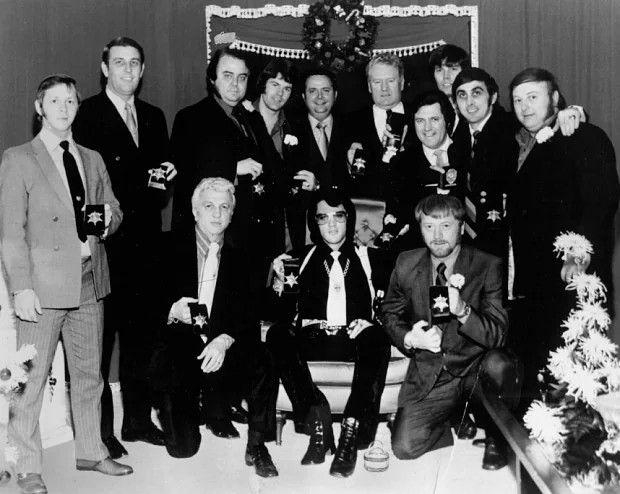
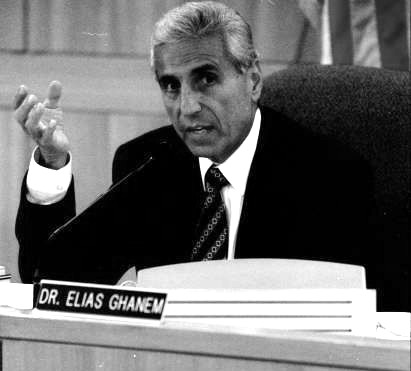
We now turn to Las Vegas doctor and businessman, Elias Ghanem, whose legacy, to be fair, is far less clear cut. Ghanem came to the public’s attention in terms of his relationship with Elvis in August 1975, when Elvis’ Las Vegas engagement was abruptly cancelled just three nights in. We have the benefit of a bootleg audience recording of the dinner show on the final night, August 20th, which shows Elvis in great form, with no real indication of looming disaster. It was reported that Elvis began to show signs of extreme fatigue later that night; he performed the midnight show, then flew out almost immediately. Upon his return to Memphis, he had a spell at Baptist Memorial Hospital.
According to UPI:
“…(Elvis) just got very tired and fatigued and we thought it would be best if he cut his show here short this time rather than run into complications,” said Dr. Elias Ghanem, the singer’s Las Vegas physician. “We can’t find much wrong with him. One of the liver enzymes is elevated and what he needs is rest…”
Dr Ghanem (1939-2001) was a successful, entrepreneurial and hardworking doctor, billing a number of Las Vegas entertainers for treatment of, amongst other things, ‘Vegas Throat’, raspy soreness caused by a combination of the dry desert air and the air conditioning (and passive smoking) within the hotels and casinos. He was also a proponent of the sleep diet; a regimen of weight loss that appeared to involve the patient being sedated for much of the time and consuming liquid nutrition during rare moments of consciousness. Elvis himself had availed himself of this regime on at least one occasion.
The Irish Times featured an obituary for Dr Ghanem upon his death from renal cancer in 2001;
“…He was Elvis Presley’s personal physician, as well as the doctor for Elvis’s posthumous son-in-law Michael Jackson. Although his patient list also included Liberace, Bill Cosby, Ann-Margret, and Virginia Kelley (the mother of former President Bill Clinton), it was Ghanem’s relationship with The King which first brought him under the spotlight of unwanted notoriety. When ABC’s television programme 20-20 reported that he had supplied the drugs which essentially killed Presley, Dr Ghanem threatened to sue – but he never did…”
The article also noted that Ghanem had been the subject of an FBI investigation over billing, but never charged, and that Colonel Parker had a financial interest in Ghanem’s clinic situated conveniently adjacent to the Las Vegas Hilton.
“…Ghanem expanded his practice to include a chain of clinics around Las Vegas, treating literally thousands of patients. He proposed innovative umbrella health-insurance schemes long before they came into vogue, and signed contracts with the Hotel and Casino Workers’ Union, by far the largest group of workers in Nevada. The arrangement was obviously a profitable one for Ghanem, but union leader John Wilhelm, recalled that during a protracted six-year strike at the Frontier Casino, Ghanem treated every worker free of charge and delivered over a hundred babies for the striking workers...”
Gary draws our attention to Dr Ghanem’s obituary in the Las Vegas Sun, which provides some interesting context.
Two-term Nevada Governor (1971-79) Mike O’Callaghan (D), told The Sun that Ghanem was ‘a very special person’ and an ‘outstanding family doctor’ who ‘practiced medicine with both his head and heart’.
O’Callaghan added, ‘During the last 30 years, I have sent dozens of sick, homeless people to him for care. No, they didn’t have any money, but they received the same excellent care as the wealthy patients’.
The vice president of the Mandalay Resort Group, Mike Sloan, was also quoted, ‘Doctor Ghanem never said no to anyone; he was always there to help people. The porter got the same treatment as the president of the resort’.
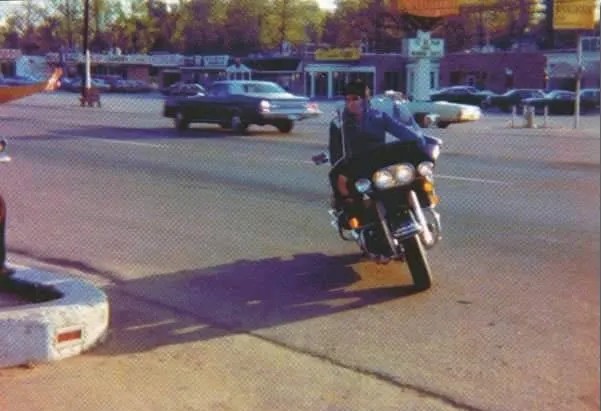
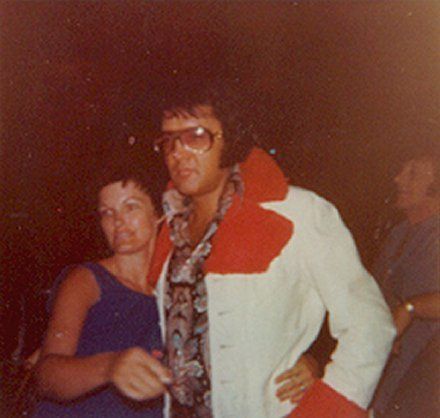
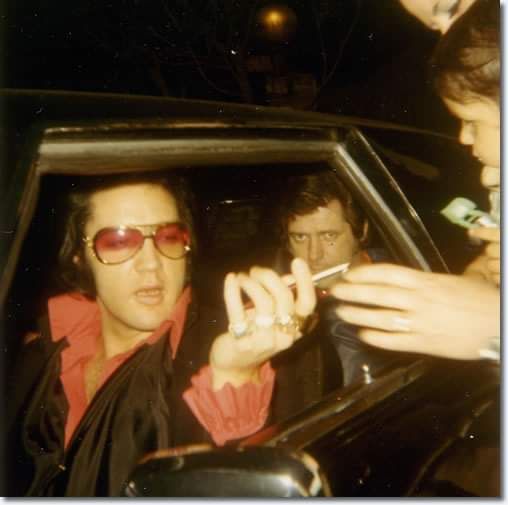
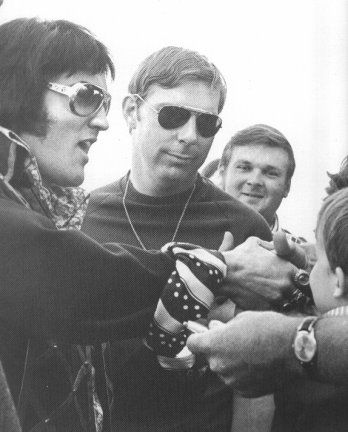
As we meander off into a more general chat in the latter segment of the podcast, we reference this photograph in the context of how Elvis’ health trajectory might not have been as easy to track as we can now, with the benefit of hindsight. The image is dated August 11th, 1977, and shows Elvis returning home after a visit to his mother’s grave at Forest Lawn Cemetery.
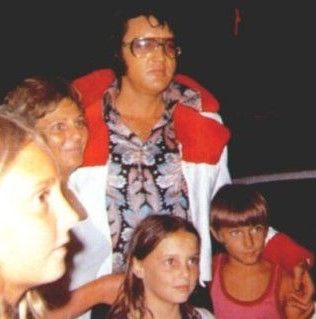
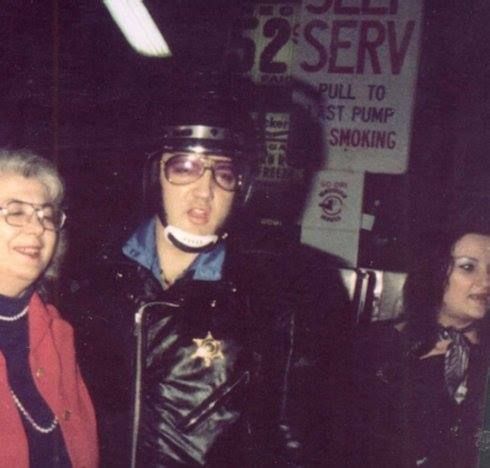
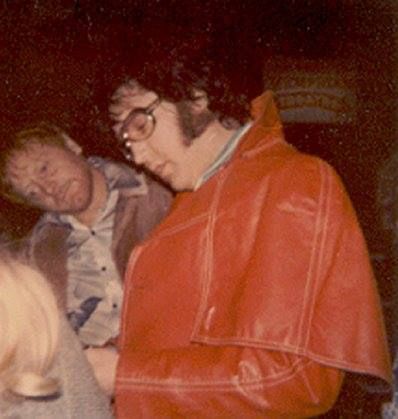
We also note that when ‘off duty’, Elvis always seemed more than willing for a photo or an autograph with fans.
Special thanks to Gary Wells, and all our readers and listeners.
Further Reference & General Interest
Gary Wells’ Vintage Leisure (SoulRide): Topic Elvis
Special thanks to Francesc Lopez and elvisconcerts.com, celebrating 30 years online in 2026;
Elias Ghanem ‘Find-a-Grave’; https://www.findagrave.com/memorial/8364129/elias_f-ghanem
George Nichopoulos ‘Find-a Grave’; https://www.findagrave.com/memorial/158594444/george_constantine-nichopoulos
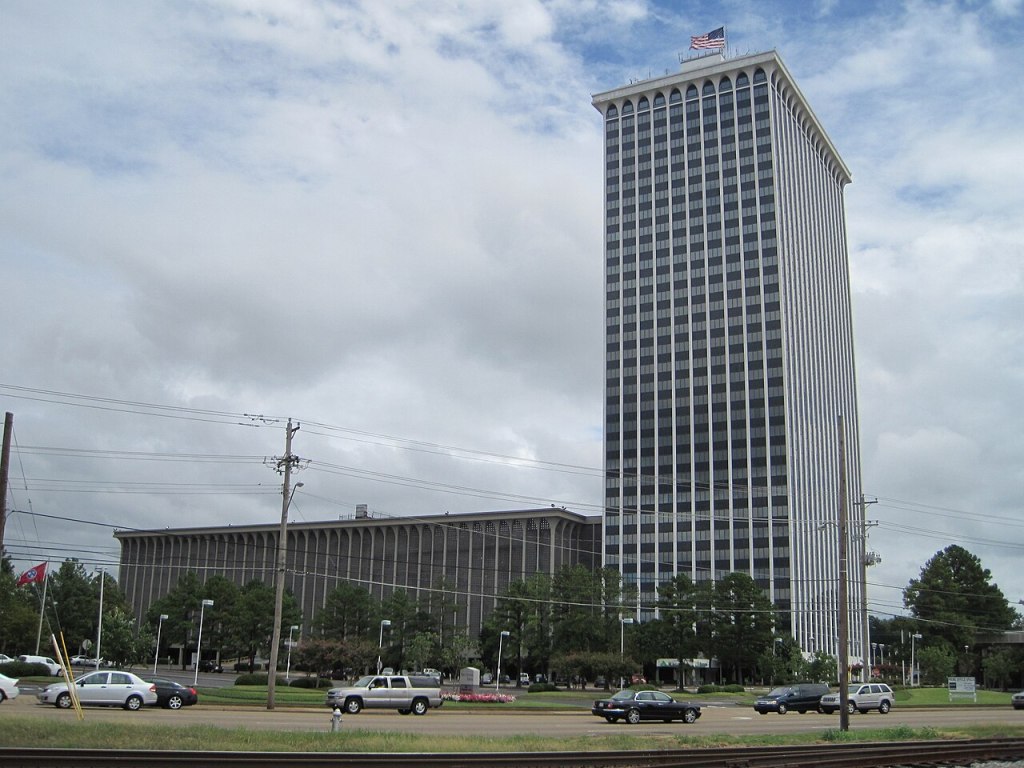
Memphis Commercial Appeal (July 2026) : ‘Historic Clark Tower Up For Sale’
As a general observation, we argue that many artists have had rough nights on the road for a variety of reasons. The Beach Boys’ 1978 tour of Australia copped a vicious pasting in the media, and poor Carl Wilson was subjected to an excruciatingly unpleasant press conference. This (audio) segment features a couple of joyously chaotic tunes, and Carl’s press grilling.
Please help us to maintain our page quality by reporting any malfunctioning or redundant links.

